The 1872 Indian Head Penny: Semi-Key Date Worth Up to $126,500

A single PCGS MS-66 Red example sold for $126,500 in 2007 — yet most collectors encounter this coin worn to a Good grade and worth around $85–$110. The difference comes down to condition, color designation, and one critical variety: the Shallow N reverse. With only roughly 5,000 examples surviving in all grades, every circulated specimen carries collector significance. This guide gives you the tools to know exactly what yours is worth.

★★★★★ 4.8 / 5 · Trusted by 1,347 coin collectors
Check My 1872 Indian Head Penny Value →
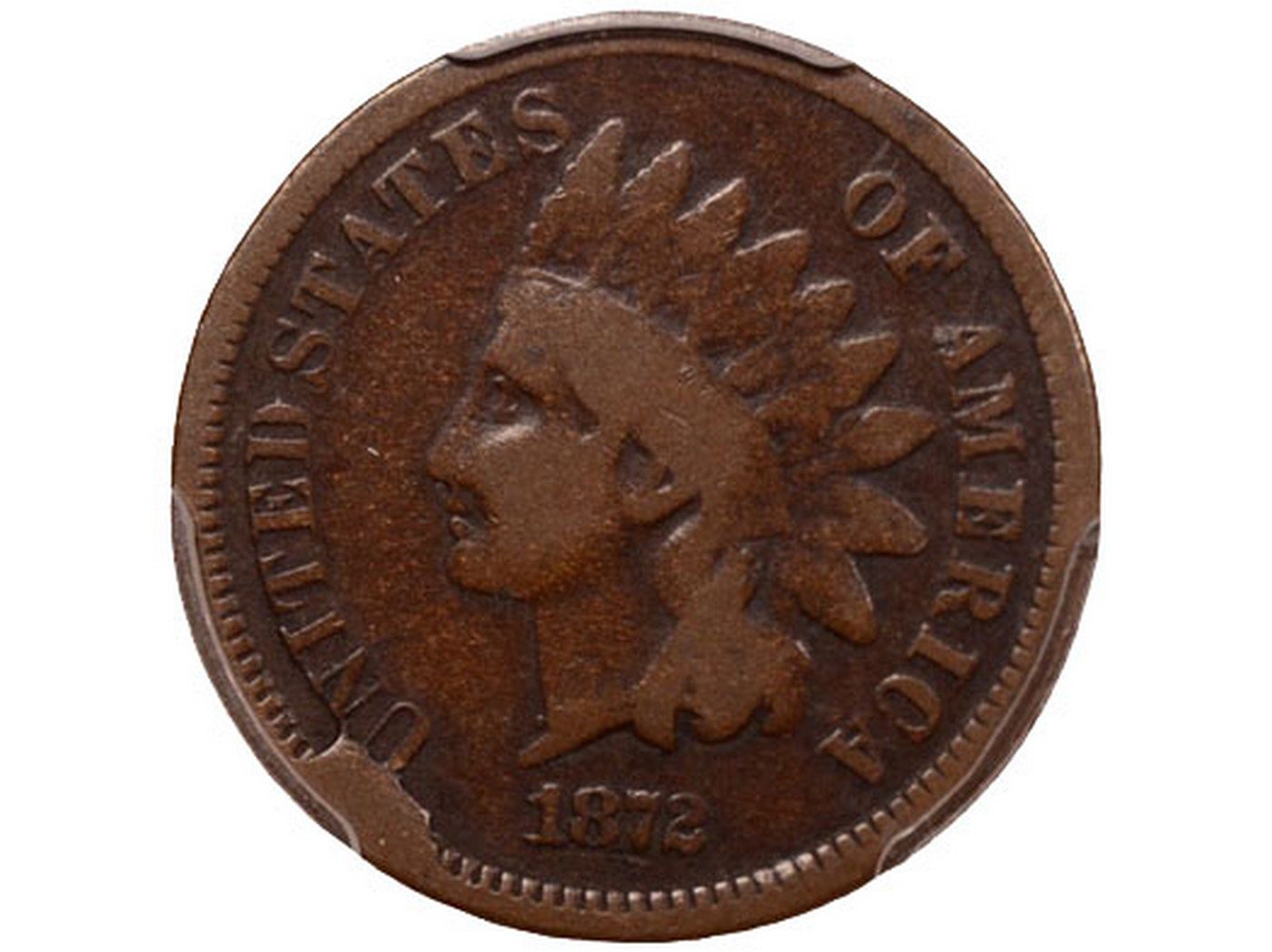
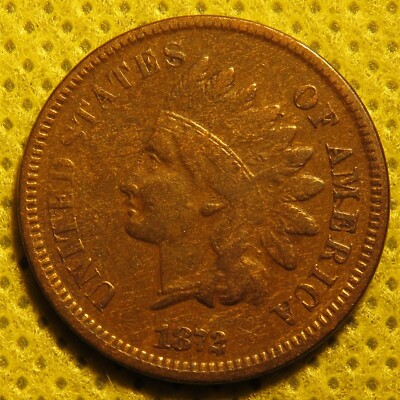
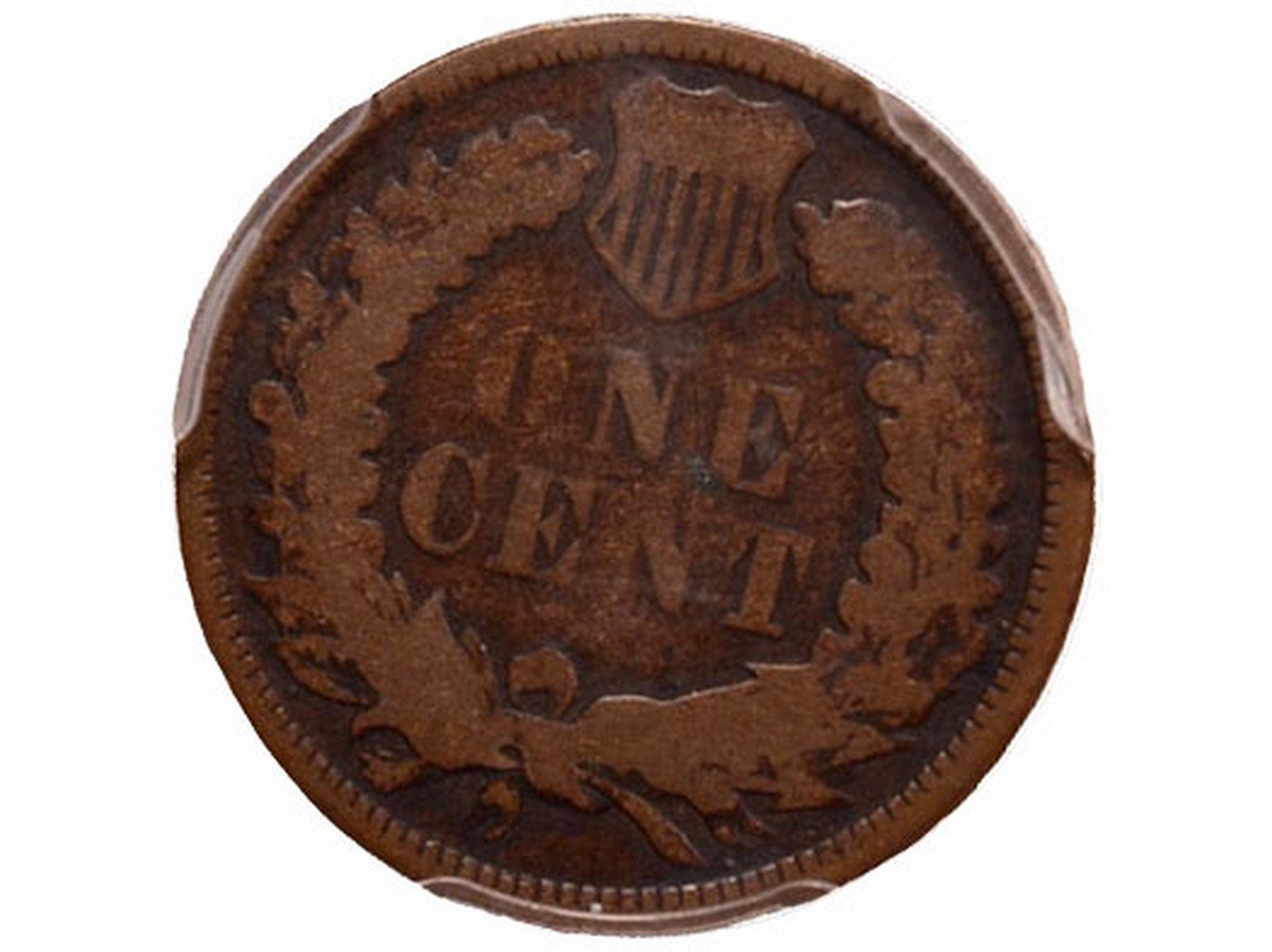
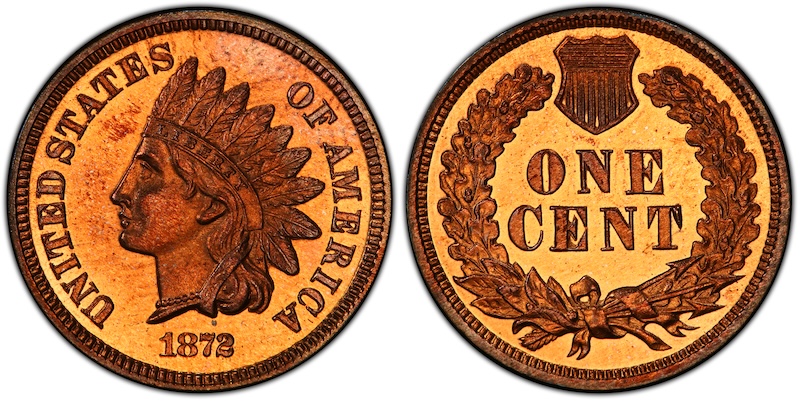
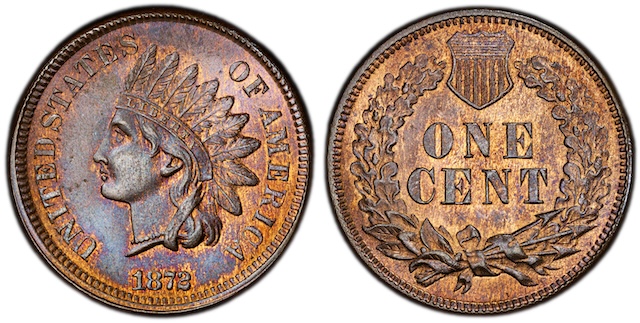
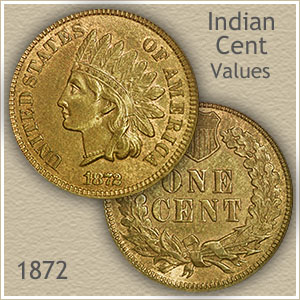
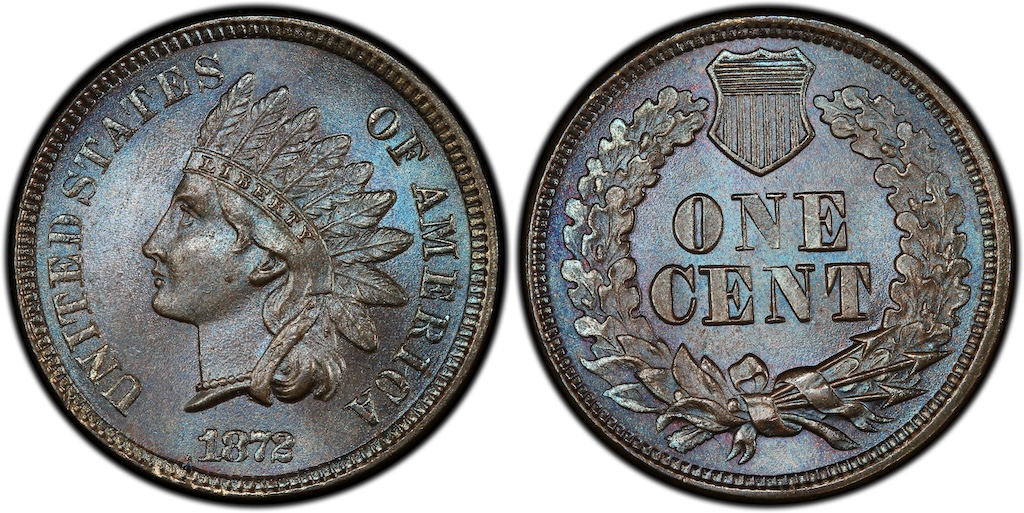
1872 Indian Head penny obverse and reverse showing Liberty portrait and ONE CENT wreath design
$126,500
Top auction record (PCGS MS-66 RD, 2007)
4,042,000
Business strikes minted (Philadelphia only)
~5,000
Estimated survivors in all grades combined
950
Proof coins struck for collectors

Free 1872 Indian Head Penny Value Calculator

Select your coin's mint, condition, and any known varieties below, then hit Calculate to get an estimated value range.

Step 1 — Mint Mark

Step 2 — Condition

Step 3 — Varieties / Errors (check all that apply)

If you're not yet sure which variety or condition applies to your coin, a 1872 Indian Head Penny Coin Value Checker online tool lets you upload photos and get an AI-assisted identification before using the calculator above.

Describe Your 1872 Indian Head Penny for a Detailed Assessment

Type a description of what you see on your coin — the more detail, the more specific the assessment. Mention condition, color, any inscriptions you notice, and any unusual features.

Mention these things if you can

  • Overall color (brown, red-brown, or red)
  • How sharp the feather tips look
  • Whether LIBERTY is fully readable
  • The N in ONE — shallow/faded or bold/deep?
  • Any date oddities (extra impressions, offset digits)

Also helpful

  • Any die cracks or rim bumps
  • Signs of cleaning (hairlines, unnatural shine)
  • Mint luster presence or absence
  • Weight (3.11 g expected) and diameter (19 mm)
  • Doubling on portrait or LIBERTY headband

Skipped the calculator?

It takes under 30 seconds — just pick your mint, condition, and any varieties you recognize. Get an instant value estimate for your 1872 Indian Head penny.

Use the Free Calculator →

🔍 Shallow N Self-Checker: Does Your 1872 Penny Have the Premium Variety?

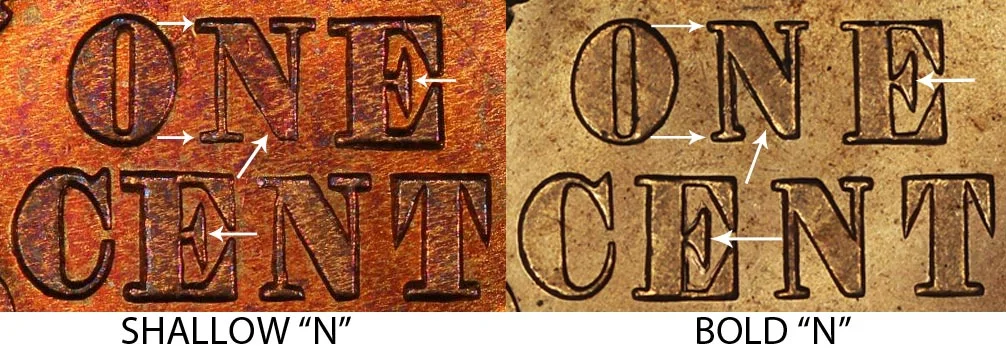
The Shallow N is the most sought-after variety of the 1872 Indian Head penny. It adds a meaningful premium in every grade. Use this checker to determine which reverse variety you have.

Side-by-side comparison of 1872 Indian Head penny Bold N (left) and Shallow N (right) reverse varieties showing differences in the letter N of ONE CENT

🔵 Bold N — More Common

  • The N in ONE is deeply struck and prominent
  • N stands fully above the coin's surface
  • E's have curved, trumpet-shaped serifs
  • Letter notches are smaller and more refined
  • This hub was introduced around 1870 and used through the rest of the series

🟡 Shallow N — Scarcer & Premium

  • The N in ONE sinks into the field, nearly blending with background
  • Noticeably lower relief compared to Bold N
  • E's have straight, T-shaped (flat) serifs
  • Letter notches are larger and squarer
  • From an older hub retained through 1872; officially retired earlier but used on some dies

Check all that apply to your coin:

1872 Indian Head Penny Value Chart at a Glance

The table below summarizes estimated market values across all major varieties and condition grades. For a complete step-by-step 1872 Indian Head cent identification walkthrough with detailed photos and grading breakdowns, visit the in-depth 1872 penny reference guide at CoinValueApp. Values are ranges based on recent Heritage Auctions, eBay, and PCGS price guide data.

Variety Worn (G–VG) Circulated (F–XF) Uncirculated (AU–MS62) Gem MS (MS63+)
Shallow N ⭐ Signature $100 – $175 $300 – $575 $700 – $1,400 $1,500 – $40,000+
Bold N (standard) $85 – $150 $250 – $500 $600 – $1,200 $1,200 – $39,000+
Proof (PF) N/A $390 – $600 (PF60–PF63) $700 – $1,500 (PF64) $2,000 – $10,000+ (PF65+)
Repunched Date (RPD) $100 – $200 $300 – $650 $750 – $1,600 $1,800 – $5,000+
DDO-001 (Snow-6) 🔴 Rarest $150 – $300 $450 – $900 $1,200 – $3,000 $4,000+

🪙 CoinKnow lets you snap a photo of your 1872 penny and cross-check its variety and estimated grade against current market data in seconds — a coin identifier and value app.

📚 Jump to Any Section

Everything you need to know about the 1872 Indian Head penny, organized in one place.

The Valuable 1872 Indian Head Penny Errors & Varieties (Complete Guide)

The 1872 Indian Head cent is catalogued across more than a dozen distinct die marriages in Rick Snow's definitive reference. Below are the five most collectible varieties — ranked by collector demand and value premium. Each can be identified with a 10× loupe and a few minutes of careful examination.

Shallow N Reverse

Most Famous
$100 – $40,000+
Close-up of the 1872 Indian Head penny Shallow N reverse variety showing the faint, low-relief N in ONE CENT

The Shallow N variety stems from the continued use of an older reverse die hub at the Philadelphia Mint into 1872. The Mint officially transitioned to a new hub style around 1870, but some 1872 dies were still sunk using the outdated hub — producing coins where the N in the word ONE is noticeably shallower and less distinct than the surrounding letters.

Visual identification is straightforward under a 10× loupe. On a Shallow N coin, the letter N in ONE appears to sink into the coin's surface rather than projecting cleanly above it. The E's throughout ONE CENT show flat, right-angle (T-shaped) serifs rather than the curved, horn-like serifs seen on the Bold N hub. Letter spacing notches are also wider and more squared at the corners.

Collectors pay a consistent premium for Shallow N examples because they represent a transitional die state — the last gasp of an older Mint production tool. At every grade level, Shallow N examples command roughly 10–15% more than Bold N coins of equivalent quality. In full Mint Red gem condition, the premium becomes dramatic: PCGS MS-65 RD examples have sold for over $3,600, and top-pop specimens achieve tens of thousands of dollars.

How to spot it

Examine the N in ONE under a 10× loupe. If the N appears to sag or fade into the background field rather than standing in sharp relief, and the E's have flat T-shaped serifs with wide angular notches, you have a Shallow N.

Mint mark

Philadelphia only (no mint mark). All 1872 Indian Head cents were struck at Philadelphia.

Notable

Catalogued in Rick Snow's reference as multiple die marriages (Snow-10a, 10b, 10c, etc.). A PCGS MS-65 RD Shallow N sold at Stack's Bowers in August 2018 (Lot 1078) for $3,600. Scarcer than Bold N in all grades.

Doubled Die Obverse — DDO-001 (Snow-6)

Rarest
$150 – $4,000+
Close-up of 1872 Indian Head penny DDO-001 obverse showing doubling visible on the LIBERTY inscription in the headband

The 1872 DDO-001, cross-referenced as Snow-6 and catalogued as FND-002 by prominent researchers, represents the most significant obverse die variety for the date. The doubling originates from a misaligned hub impression during the die-making process — two hub strikes on a single working die at slightly different positions created an overlapping impression that transferred to every coin struck from that die.

Detection requires a 10× loupe focused on the obverse LIBERTY inscription in the feathered headband. Doubling appears as a notch or shelf of displaced metal running alongside the primary letter images. The portrait elements — particularly the hair detail near the ear and the ribbon end — may also show signs of the doubled hub. Unlike polishing-related artifacts, true hub doubling shows clean, consistent offset throughout the affected area rather than a smeared or washed appearance.

The DDO-001 also features a repunched date (RPD-003), making it a doubled die and repunched date coin on the same die — a compound variety that is both diagnostically distinctive and exceptionally rare. Population figures for attributed examples in any grade above Fine are very low, and the combination of both attributable errors on one coin makes it highly desirable to specialist collectors of early Indian cents.

How to spot it

Under a 10× loupe, check LIBERTY in the headband ribbon for a shelf or notch of displaced metal beside each letter. Also examine the date digits for any secondary impressions to the south, confirming the accompanying RPD-003 attribution.

Mint mark

Philadelphia only (no mint mark). The DDO-001 is a business-strike variety; no proof equivalent is known.

Notable

Attributed by researcher Larry Steve; cross-referenced as Snow-6 and FND-002 in the definitive die variety reference. Population of attributed examples is extremely low in grades above Fine. Compound DDO + RPD designation adds authentication premium.

Repunched Date (RPD) — Multiple Varieties

Most Valuable Error Type
$100 – $5,000+
Close-up of the 1872 Indian Head penny date area showing repunched date with secondary digit impressions visible below the primary 1872 numerals

Repunched dates on the 1872 Indian Head cent result from the die-making practice of individually punching each date numeral by hand into the working die. If a digit was set slightly off-center, tilted, or placed in the wrong position, the Mint would re-punch it — but the ghost of the original impression often remained visible on the completed die and thus on every coin it struck. Rick Snow's reference documents at least three distinct RPD varieties for 1872 (RPD-002, RPD-003, and RPD-005).

The most diagnostic RPD for the year is RPD-003, where an initial date impression appears shifted to the south below the base of the 1. RPD-002 (Snow-4a/4b) shows the date positioned to the west, with secondary impressions visible within the digit loops. These secondary impressions appear as small raised bumps, "shelves," or ghost outlines adjacent to or partially overlapping the primary date digits, most visible at the base of the 1 or within the loops of the 8 and 2.

Repunched date cents from 1872 carry a premium across all grade levels but especially in Fine and better condition, where the detail necessary to attribute the variety remains readable. Attribution by PCGS or NGC to the specific Snow variety number adds a further premium. The compound DDO + RPD-003 (Snow-6) is particularly valuable due to its dual attribution status, but standard standalone RPD varieties still command meaningful premiums over type coins in the same grade.

How to spot it

With a 10× loupe, examine each date digit for ghost impressions at its base or within its loops. Look below the base of the 1 for an extra raised impression. Check the 8 and 2 loops for any secondary bumps or shelf-like protrusions.

Mint mark

Philadelphia only (no mint mark). All three documented RPD varieties are business-strike Philadelphia issues.

Notable

RPD-002 attributed by Dave Welsh (Snow-4a/4b, FND-003); RPD-003 by Larry Steve (Snow-6); RPD-005 by James Schirrippa (Snow-11). Attribution by a major grading service significantly increases realized auction prices versus raw/unattributed examples.

Die Cud Varieties (CUD-001 and Reverse Cuds)

Best Kept Secret
$120 – $2,500+
Close-up of die cud on a 1872 Indian Head penny showing a raised flat blob of metal at the coin's rim from a broken die segment

Die cuds form when a portion of the working die chips or breaks away completely, usually at the rim. The missing die metal produces a raised, flat area on the struck coin because the planchet metal fills the void left by the broken die segment. The 1872 series is notable for an unusually high number of documented cud varieties — the indiancentvarieties.com reference lists over twelve distinct die marriages with cud breaks, more than any nearby date in the early 1870s.

The primary obverse cud (CUD-001) appears between the 7:00 and 7:45 position on the coin's face, accompanied by a die crack that runs from the cud up through the tops of UNITED on the reverse. Reverse cuds are documented at multiple clock positions including 9:00–10:30, 11:30–12:30, and 8:30–9:45, among others. Retained cuds — where the broken die segment remains partially in place but raised above the normal surface — are also present on certain die marriages.

Cud coins from 1872 carry a genuine premium because they document the late-die state of specific die marriages and can only have been produced during a specific brief window in the minting process before the broken die was retired. High-grade cud coins are especially desirable, as most examples encountered in commerce are heavily worn, where the cud itself may be the only distinguishing diagnostic feature. Eye-appealing cuds in Fine or better condition are genuinely scarce and attract specialist bidding.

How to spot it

Look at the coin's rim under a 10× loupe for a raised, flat blob of metal that blends into the surrounding field without design detail. Unlike a planchet flaw, a true cud aligns precisely with the die crack and shows completely flat, blank metal in the affected area.

Mint mark

Philadelphia only (no mint mark). Both obverse and reverse cud varieties are documented on the 1872 business-strike series.

Notable

CUD-001 attributed by David Poliquin (cross-referenced Snow N/A). The 1872 cent has more documented cud varieties than its neighbors in the series, reflecting heavy die use under a high mintage pressure year. Retained cuds (partial breaks) are catalogued separately and command a further premium.

1872 Proof Indian Head Cent

Key Collector Piece
$390 – $10,000+
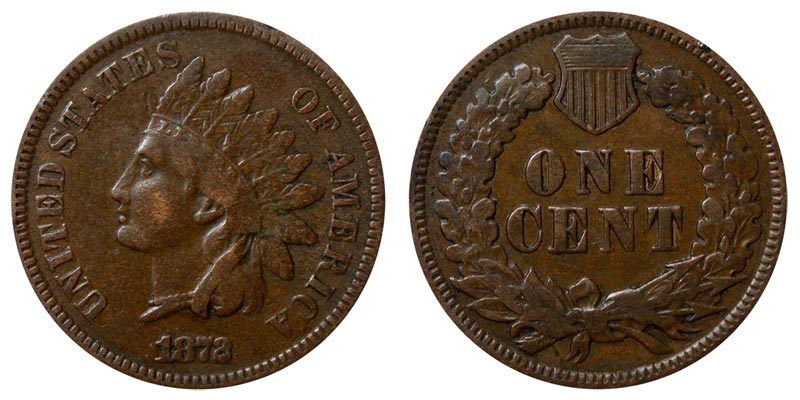
1872 proof Indian Head penny showing mirror-like fields and sharp cameo contrast between the reflective background and frosted portrait devices

The Philadelphia Mint struck an estimated 950 proof 1872 Indian Head cents for sale to collectors, continuing its long tradition of producing collector-quality presentation pieces alongside business strikes. Proof coins were struck using specially prepared, mirror-polished dies on selected, carefully handled planchets, typically struck two or more times to bring up the full sharpness of the design against a reflective field background.

Identification of a genuine proof 1872 cent requires examination of the field surfaces (the flat background areas of the coin). On a true proof, these fields will be sharply mirror-like — you can see reflections in them. The devices (Liberty's portrait, the wreath and legend on reverse) will show a frosted or matte surface contrast against the mirror fields. This cameo contrast is the defining proof characteristic and cannot be replicated by cleaning or polishing a business-strike coin.

The 1872 proof series uses the Type 2 hub reverse, and most examples are encountered with Brown (BN) or Red-Brown (RB) designation due to natural toning over 150+ years. Full Red (RD) proof examples are among the rarest color designations in the Indian Head proof series for this date and, when certified, command very strong premiums. NGC records 275 proof 1872 cents in its population data, including both BN and higher-color designations, making this a genuinely scarce collector issue.
How to spot it

With naked eye inspection, check for perfectly mirror-like fields (you can see a reflection). Under a loupe, look for razor-sharp design edges with no softness or flow lines. Wire rims are common on proofs — look for an extremely sharp, square-edged rim profile.

Mint mark

Philadelphia only (no mint mark). All 1872 proof cents were struck at the Philadelphia Mint as part of the annual proof set offering.

Notable

NGC population: 275 proof examples certified across all grades and color designations (as of 2024). A PF-60 Brown trades around $390; PF-65 Red examples, when they appear, routinely exceed $3,000–$5,000. Cameo and Deep Cameo designations command additional premiums from proof specialists.

Found one of these errors on your coin?

Run it through the free calculator to get a value estimate tailored to your specific variety and condition. Takes under a minute.

Calculate My Coin's Value →

1872 Indian Head Penny Mintage & Survival Data

Group of 1872 Indian Head pennies in various grades from worn Good through About Uncirculated, showing the range of surviving condition for this semi-key date
Issue Type Mint Mintage Est. Survivors Notes
Business Strike Philadelphia (P) 4,042,000 ~5,000 total (all grades) Heavy attrition from mass meltings 1872–1881
Proof Philadelphia (P) ~950 ~275 certified (NGC) Mirror fields; Type 2 hub reverse; struck for collectors
Total ~4,042,950 ~5,275+ All from Philadelphia; no branch mint cents in 1872
DesignerJames B. Longacre
Composition95% Copper, 5% Tin & Zinc
Weight3.11 grams
Diameter19.00 mm
EdgePlain (smooth)
Series years1859–1909

Context: The U.S. Treasury redeemed and melted over 5.6 million bronze cents in 1872 under the Act of March 3, 1871 — more coins than the entire 1872 business-strike mintage. This mass redemption, combined with 150 years of normal attrition, explains why the survival rate is so low relative to the original production number. The 1872 was the only year in the decade without a branch-mint cent issue.

How to Grade Your 1872 Indian Head Penny

Grading strip showing four 1872 Indian Head pennies in Good, Fine, About Uncirculated, and Mint State condition illustrating the range of preservation

Grading drives value more than any other single factor on the 1872 cent. The coin's three high-wear zones — the hair curl above Liberty's ear, the ribbon knot, and the headdress feather tips — tell the story of a coin's life in circulation. Check each in sequence.

Worn (Good–VG, G-4 to VG-10)

Major design elements — the portrait outline, date, LIBERTY in the headband — are visible but flat. All feather tips are worn smooth. The ribbon detail is largely gone. LIBERTY may show only partial letters on a G-4 coin but should be complete in VG.

~$85 – $175

Circulated (Fine–XF, F-12 to XF-45)

All LIBERTY letters readable. Feather tips show separation but are somewhat flattened. At Fine, the ribbon details start to emerge. At XF, hair detail above the ear is visible, the ribbon shows full texture, and only the very highest points have wear.

~$250 – $575

About Uncirculated (AU-50 to AU-58)

Wear visible only on the absolute highest points: hair curl above ear and the bow knot. At least half the original mint luster remains in the protected areas. The cheek and most of the portrait show original surface texture. No major abrasions.

~$600 – $1,200

Mint State (MS-60 to MS-66)

Zero wear anywhere. Original mint luster flows from rim to rim under a rotating light. Color designation (BN/RB/RD) becomes critical: Red examples are extremely rare for 1872. Even MS-62 Brown examples command $1,000+. MS-65+ Red is a trophy coin.

$1,000 – $126,500+
🔬 Pro Tip — Color Designation for Mint State Coins: The 1872 is considered the hardest date in the entire Indian Head series to find with full original red (RD) luster. Uneven mixed-alloy planchets caused many 1872 coins to emerge from the press with streaky or inconsistent surfaces, toning rapidly to brown. If your coin shows 95%+ original copper-red color across both faces with no spots or streaks, it warrants immediate professional grading — there are only 2 PCGS-graded MS-66 RD examples known.

📱 CoinKnow gives you an instant side-by-side comparison against graded examples of the 1872 Indian Head penny to help confirm your condition assessment before submission — a coin identifier and value app.

Where to Sell Your Valuable 1872 Indian Head Penny

The right venue depends on your coin's grade and variety attribution. Higher-grade and variety coins reward patience and specialist audiences; worn examples sell fine almost anywhere.

🏆 Heritage Auctions / Stack's Bowers

The best venue for any 1872 cent grading XF or better, attributed varieties, and especially Mint State or proof examples. Specialist bidders in major auction sessions understand the scarcity of this date and will pay full collector premiums. Expect a seller's commission of around 15–20%, but realized prices typically justify it for coins worth $500+.

🛒 eBay

Good mid-tier option for circulated examples in Good through XF grades. Check the recent sold prices and completed 1872 Indian Head penny listings on eBay to price your coin competitively before listing. Use PCGS or NGC holder photos prominently — slabbed coins consistently outperform raw examples. Fees run about 13% total.

🏪 Local Coin Shop (LCS)

Convenient for quick sales of worn examples (Good through VF). Dealers will typically offer 50–60% of retail for circulated raw coins because they need to make a margin. For a key date like the 1872, consider getting at least two dealer quotes before accepting. Shops can also handle grading submission paperwork if you're new to the process.

💬 Reddit (r/coins, r/CoinSales)

Active community of knowledgeable collectors who pay closer to retail prices than dealers. Good for slabbed or clearly identified variety coins where you can show photos and explain attribution. Transactions require trust-building (post history, feedback) but fees are nil. Ideal for coins in the $100–$500 range where auction commissions eat too much into profit.

💡 Get It Graded First

Any 1872 Indian Head penny you believe grades Fine or better — and especially any coin showing the Shallow N, an RPD, or DDO characteristics — should be submitted to PCGS or NGC before selling. The certification fee ($35–$50 for standard tier) is trivially small compared to the premium a slabbed, attributed example commands. A raw XF 1872 might bring $400; the same coin in a PCGS XF-45 holder with Shallow N attribution routinely sells for $550 or more. For Mint State examples, certification is non-negotiable.

Frequently Asked Questions — 1872 Indian Head Penny Value

What is the value of a 1872 Indian Head penny in worn (Good) condition?
A heavily worn 1872 Indian Head penny grading Good-4 typically sells for around $80–$110, depending on the variety. The Bold N version trades near $90 and the scarcer Shallow N variant commands roughly $100 or more in the same grade. Despite significant wear, the 1872 date is scarce enough that even low-grade examples hold solid collector premiums above face value.
What is the difference between the Shallow N and Bold N variety on the 1872 Indian Head penny?
The Shallow N and Bold N refer to how the letter 'N' appears in the word 'ONE' on the reverse. The Shallow N uses an older hub where the N is shallowly struck, almost blending into the background, with straight T-shaped serifs on the E's. The Bold N uses a newer hub with a deeper, more pronounced N and trumpet-shaped serifs. The Shallow N is slightly scarcer and commands a premium across all grades.
How many 1872 Indian Head pennies were made?
The Philadelphia Mint struck 4,042,000 business-strike 1872 Indian Head cents for general circulation, along with approximately 950 proof coins for collectors. Despite the mintage being slightly higher than the 1871, mass cent redemptions and meltings under the Act of March 3, 1871 dramatically reduced the surviving population. PCGS estimates only around 5,000 examples survive today in all grades combined.
What is the auction record for the 1872 Indian Head penny?
The top recorded auction sale for a 1872 Indian Head penny is $126,500, achieved by a PCGS MS-66 Red example at auction in August 2007. This coin is one of only two graded at MS-66 RD by PCGS, with none finer known. In full original red, the 1872 is considered the most difficult date in the Indian Head series to find with intact mint luster, making gem red examples extraordinarily rare.
Is the 1872 Indian Head penny a key date?
The 1872 is considered a semi-key date in the Indian Head cent series. It ranks second only to the famous 1877 (the true key date) in premium across most grades, and actually outprices the 1871 despite a slightly higher mintage. Massive cent redemptions after 1871 reduced the surviving population significantly, making the 1872 one of the hardest dates to locate in any condition above Fine.
What is the value of the 1872 Indian Head penny proof?
The 1872 proof Indian Head cent had an estimated mintage of approximately 950 pieces. A PF-60 Brown example is worth around $390, while proof coins in higher grades command significantly more. Proof coins were struck with mirrored dies on specially prepared planchets, giving them sharp cameo detail. They are distinct from business strikes and command a premium even in lower proof grades.
Why is the 1872 Indian Head penny so scarce despite a mintage of 4 million?
The U.S. Treasury redeemed and melted millions of bronze cents under the Act of March 3, 1871, with over 5.6 million bronze cents destroyed in 1872 alone. Combined with normal attrition from circulation, this dramatically reduced the surviving pool. Uneven mixed-alloy planchets also made high-quality mint-state survivors especially rare, as many coins emerged streaky or weakly struck even when first produced.
What are the main die variety types found on the 1872 Indian Head penny?
Beyond the primary Shallow N and Bold N reverse varieties, the 1872 cent features several documented die varieties including repunched dates (RPD), misplaced dates (MPD), die cuds at various clock positions, doubled die obverses (DDO-001 cross-referenced as Snow-6), and hub-through artifacts. Rick Snow's reference catalogues over a dozen distinct die marriages for 1872, making it a rich date for die-variety specialists.
How can I tell if my 1872 Indian Head penny has been cleaned?
Look for hairline scratches in the coin's fields when viewed under a single-point light source tilted at an angle. A cleaned coin will often appear unnaturally bright or show a dull, gray, washed-out surface rather than the warm, natural brown or red-brown toning expected on an original coin. NGC and PCGS reject cleaned coins from full numerical grading; such pieces receive a 'Details' designation, which significantly reduces value.
Where is the best place to sell a valuable 1872 Indian Head penny?
For high-grade or variety examples worth more than $500, Heritage Auctions or Stack's Bowers typically achieve the best realized prices through competitive bidding from specialist collectors. eBay works well for mid-grade circulated pieces. Local coin shops offer quick sales but lower prices. Consider PCGS or NGC certification before selling any coin you believe grades AU or Mint State, as slabbed examples consistently command premiums over raw coins.

Ready to find out what your 1872 Indian Head penny is worth?

Use our free calculator — pick your condition, check your variety, and get an instant value estimate in under 30 seconds. No signup required.

Get My Free Estimate →